When it comes to audio nostalgia, nothing quite beats the charm of a Gramophone Record Player. I mean, according to expert Robert Lang, "The real magic of a gramophone lies in how it can bring back memories." That nostalgic vibe is what draws so many people to hunt down good quality players that can really change the way they experience music.
As more folks get interested in gramophones, a bunch of manufacturers have popped up—everything from tiny artisanal workshops to big factories. Honestly, there’s a wide range to choose from. Some use cutting-edge tech, while others focus more on handmade craftsmanship. Yeah, it can get pretty overwhelming trying to figure out which one’s right for you.
Some factory-made players produce lively, one-of-a-kind sounds, but others might fall short when it comes to the precision we’re used to these days. Like Lang points out, each gramophone has its own story to tell, but not every story is perfect. So, it’s really worth thinking about what makes a player special to you and finding a factory that lines up with your idea of what good sound should be like.

Overview of ODM and OEM in the Gramophone Record Player Industry
The ODM (Original Design Manufacturer) and OEM (Original Equipment Manufacturer) concepts are pivotal in the
Modern Gramophone Record Player
industry. OEMs often produce components based on specified designs, while ODMs take a more comprehensive role, crafting entire products based on unique client needs. This dynamic allows smaller companies to compete in a market dominated by larger brands. According to recent market analysis, the global vinyl record player market is projected to grow by 15% each year, reflecting the rising popularity of analog audio.
Manufacturers face challenges in maintaining high quality while meeting increasing demand. Many ODMs must balance the need for innovation with production efficiency. In the pursuit of creating modern gramophone record players, details such as sound quality, design aesthetics, and eco-friendliness must not be overlooked. A study revealed that 73% of consumers prioritize sound quality, yet many manufacturers still struggle to meet these expectations.
Moreover, the supply chain is often complex. Fluctuations in raw material costs can lead to unpredictable pricing. Some factories rely heavily on specific components sourced from a limited number of suppliers. This reliance can hinder flexibility and responsiveness to market trends. While the allure of custom designs is strong, it’s a reminder that errors can ripple across operations, leading to delays. Balancing creativity with practicality is an ongoing struggle in this evolving industry.
Criteria for Selecting Top Gramophone Record Player Factories
Selecting the right ODM and OEM factories for gramophone record players is crucial. A detailed approach ensures that quality and design meet industry standards. According to a report by ResearchAndMarkets, the global record player market is expected to grow significantly, reaching USD 10 billion by 2025. This growth highlights the importance of choosing reliable factories that understand market demands.
One key criterion is manufacturing capability. Factories should have advanced technology and skilled labor. Production capacity should align with market trends. It’s essential to check their history and look for certifications like ISO. Quality control processes should be robust. A factory that cuts corners might deliver subpar products.
Additionally, consider their design capabilities. Customization options can greatly impact product appeal. A factory's flexibility in adapting designs to trends is vital. A report from Statista indicates that vintage vinyl players are in demand. However, not all manufacturers can keep up with this trend. Some fail to innovate. Factories that do not invest in research and development may lag behind. It is necessary to assess their willingness to evolve.
Highlight of the Leading ODM Factories for Record Players
When exploring the landscape of ODM factories specialized in record players, several names stand out. These manufacturers focus not only on production but also on innovation. They incorporate modern technology while respecting the timeless charm of the Vintage Gramophone Record Player. Such factories understand the importance of quality materials and craftsmanship. However, not every factory meets these standards. Some may cut corners to save costs, leading to inferior products.
Collaboration with these ODM factories can be beneficial. They help brands design unique products that appeal to niche markets. Yet, not all factories provide consistent quality. There are instances where manufacturers overlook the nuances that make a Vintage Gramophone Record Player truly captivating. Small details, like the finish of the wood or the precision of the audio components, can significantly impact the overall experience.
Choosing the right factory is crucial. A reliable partner can elevate the product line, but lapses in quality control can derail a business. It’s essential to visit facilities, inspect processes, and engage in dialogue. This hands-on approach mitigates the risk of disappointing outcomes. Investing the time upfront can prevent challenges later in production. Ultimately, it’s about finding the perfect balance between tradition and modernity.
Spotlight on Prominent OEM Manufacturers in the Industry
The demand for Gramophone Record Player Vintage items has surged in recent years. According to industry reports, the global market for vintage audio equipment is projected to grow by 15% annually. This resurgence is not just a trend; it reflects a deep-seated love for analog sound. Many manufacturers are jumping into the fray, developing innovative designs while maintaining traditional craftsmanship.
Prominent OEM manufacturers play a crucial role in this industry. They focus on quality control and sustainable practices. Reports highlight that over 70% of successful factories invest significantly in environmentally friendly processes. Many of these companies blend modern technology with classic aesthetics. However, some face challenges in maintaining consistency.
Quality discrepancies can impact consumer trust, especially in a niche market where authenticity matters. Additionally, there's a heavy reliance on skilled labor. Many factories struggle to find artisans who understand the complexities of vintage audio. This gap can lead to production delays and inconsistent product quality.
Balancing automation with handcrafted precision remains a challenge. It's essential for manufacturers to innovate while respecting traditional methods. Such efforts can result in superior Gramophone Record Player Vintage products, satisfying both new and nostalgic customers.
Innovative Technologies Used by Top Record Player Factories
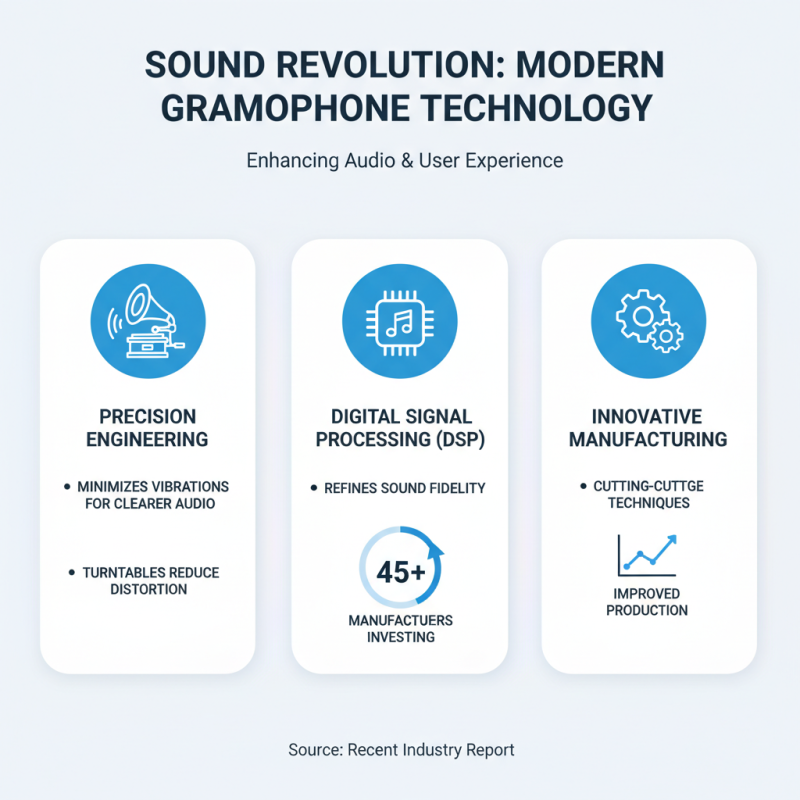
Innovative technologies are transforming the way we experience music. In the realm of gramophone record players, many factories are adopting cutting-edge techniques to enhance sound quality and user experience. For instance, advancements in precision engineering have made it possible to produce turntables that minimize vibrations, resulting in clearer audio output. According to a recent industry report, over 45% of manufacturers are now investing in digital signal processing to refine sound fidelity in their products.
Moreover, sustainable practices are becoming increasingly important. Factories are integrating eco-friendly materials into their designs. This not only reduces environmental impact but also resonates with a growing consumer awareness. A study shows that 38% of consumers prefer products made with sustainable components. This trend underscores a shift towards greater responsibility within the industry.
However, the transition to these innovative approaches isn't seamless. Some manufacturers are struggling to balance production costs while implementing new technologies. The challenge lies in maintaining affordability without compromising quality. In a market that values both the classical appeal of the gramophone and modern efficiency, finding the right balance is crucial. The demand for Gramophone Player Modern designs continues to rise, reflecting the complexity manufacturers face in meeting diverse consumer expectations.
Quality Control Practices in Gramophone Production
Quality control in gramophone production plays a vital role in ensuring the final product meets consumer expectations. Factories rely on rigorous testing protocols. They check materials before assembly. Acoustic performance is a top priority, and every component must pass tests. However, not all factories maintain consistent standards. Some overlook minor defects during production. This can lead to unsatisfactory performance in the final product.
The production line includes various stages of assessment. Workers conduct visual inspections. They examine the finished gramophones for any noticeable flaws. This process can be tedious, and not all employees adhere to the guidelines. Skimping on detail is common. Moreover, a lack of motivation can result in oversight. There are reports of units leaving the factory without proper checks. This poses a challenge for maintaining quality across batches.
Inconsistent machinery calibration can contribute to defects as well. If machines are not frequently checked, mistakes occur. This can lead to variations in sound quality and durability. Some factories implement training programs for quality assurance. However, it's not universal. Many workers lack the training needed to identify complex issues. This inconsistency raises concerns for both manufacturers and consumers alike.
Trends Shaping the Future of Gramophone Record Players and Manufacturing
The future of gramophone record players is evolving. Innovations in technology are influencing design and manufacturing processes. New materials are being explored, offering lighter, more durable options. These changes enhance sound quality. Enthusiasts seek improved listening experiences.
Sustainability is also a significant trend. Consumers demand eco-friendly products. Factories must adapt to these expectations. Using recycled materials can reduce waste. It sometimes requires a reevaluation of traditional methods.
Moreover, nostalgia drives interest in vintage designs. Modern players often replicate classic aesthetics. This trend poses challenges for manufacturers. Balancing authenticity with new technology is complex. It's a reflection of consumer desires and market demands.
Top 10 ODM OEM Gramophone Record Player Factories
Unleashing the Classics: Exploring the HP-H2402 Turntable Record Player for High-Fidelity Audio Experience
The HP-H2402 Turntable Record Player is poised to redefine the high-fidelity audio experience, particularly for audiophiles seeking a perfect blend of vintage aesthetics and modern technology. With its wood grain finish and customizable colors, the HP-H2402 stands as a mid-to-high-end turntable that not only complements home decor but also elevates the auditory experience. Recent market data indicates that the demand for high-quality vinyl players has surged, with a growth rate of 29% in the audiophile segment over the past two years, marking a robust return to classic music formats.
At the heart of the HP-H2402’s appeal is its commitment to quality. Each turntable is equipped with superior cartridges and motors, ensuring crystal-clear sound reproduction and a dynamic listening experience. The stringent quality control processes, including 100% aging testing, provide reassurance that every unit delivers consistent performance. With certifications such as FCC, CE, and RoHS, the HP-H2402 meets international standards for safety and reliability, further enhancing its allure to discerning customers.
Additionally, the capacity for OEM and ODM customization positions the HP-H2402 to meet diverse consumer preferences, whether in style or functionality. Backed by years of manufacturing experience and a commitment to excellent after-sales service, this turntable is not just a product; it represents a dedication to the art of sound. As the vinyl revival continues, the HP-H2402 stands ready to cater to those who appreciate the timeless charm of analog audio while enjoying the benefits of modern craftsmanship.
FAQS
: The service aims to provide quick and reliable solutions to common problems.
Users can submit inquiries online. Responses are generated based on provided information and algorithms.
The basic service is free. Some advanced features may require a fee.
Yes, as long as you have internet access, you can use the service from any location.
User data is processed securely. However, it's essential to avoid sharing sensitive personal information.
The system may not always be perfect. Users should verify critical information from trusted sources.
Yes, some complex issues may not be addressed effectively. Simpler questions yield better results.
Yes, user feedback is encouraged. It helps improve the service over time.
Updates occur regularly, but some content may sometimes be outdated.
Yes, basic support is provided. Users may face delays during peak times, though.
Conclusion
The article titled "Top 10 ODM OEM Gramophone Record Player Factories You Should Know" provides an insightful overview of the original design manufacturers (ODM) and original equipment manufacturers (OEM) within the gramophone record player industry. It discusses key criteria for selecting premier factories, emphasizing factors such as innovation, quality, and technology integration. The piece highlights leading ODM factories, alongside prominent OEM manufacturers making notable contributions to the market.
Additionally, the article delves into the innovative technologies shaping production processes and the stringent quality control practices that ensure high standards in gramophone production. It also outlines the emerging trends that are influencing the future landscape of gramophone record players, ensuring that manufacturers stay ahead in a competitive environment. Through this exploration, readers gain a comprehensive understanding of the current industry framework and the advancements driving the evolution of gramophone record players.